Fire-Rated Door Repair and Drop Testing
A fire door that cannot close is a code problem and a safety problem. Tell us what is going on and we will dispatch a commercial door professional experienced with fire door requirements.
Your Building's First Line of Defense in a Fire
A fire-rated door is a labeled assembly designed to close on its own and hold back flames and smoke for a rated period, commonly 45 minutes, 90 minutes, or 3 hours. It compartmentalizes the building during a fire so escape routes stay usable and damage stays contained. Fire-rated door repair keeps that protection ready, because a rated door that cannot release and close is not protecting anything.
Most commercial fire doors are rolling steel curtains held open against spring tension. A fusible link, a small metal connector that melts at roughly 165 degrees Fahrenheit, or a signal from the alarm system releases the door so it closes without anyone present. Every part of that chain has to work: the springs, the governor that controls closing speed, the link, and the guides the curtain travels in.
When you call, we dispatch an independent local professional experienced with fire door hardware and the requirements that apply to it. The same network covers the rest of your building too. See our commercial door services for the full range, and if the property has residential doors as well, the same call covers garage door repair too.
Signs Your Fire Door Needs Repair
Fire doors sit closed or held open for years between events, so problems hide easily. Any of these is a reason to book service.
The Door Dropped and Will Not Reset
A door that released during a test or an alarm needs its spring tension restored and its release mechanism re-engaged in the correct order. This is not a job to improvise.
The Curtain Slams Instead of Lowering
A governor controls the closing speed. A door that free-falls is dangerous to anyone underneath it and usually fails its next test.
The Fusible Link Is Painted Over or Corroded
The link has to separate cleanly when it melts. Paint, corrosion, or a missing link means the door may never release in a fire.
Slats, Guides, or the Bottom Bar Are Damaged
Bent components can bind the curtain so it stops before reaching the floor, leaving a gap that defeats the rating.
The Door Binds or Stops Short of the Floor
A rated door has to close completely on its own. Hanging up partway is a failed test, even if the door looks fine at rest.
No Drop Test on Record in the Last Year
If you cannot produce documentation of an annual test, the door is out of compliance regardless of its condition.
Why a Failed Fire Door Cannot Wait
An inoperable rated door is not a cosmetic issue. It creates three problems at once.
Life Safety
The door exists to hold back fire and smoke. If it cannot close, the opening it protects is effectively unprotected.
Code Compliance
Fire codes require rated doors to be kept in working condition and tested annually. A failed door is a citable violation at your next inspection.
Liability and Insurance
If fire spreads through a door that was known to be broken, the paper trail matters. Documented repairs and test records protect the business.
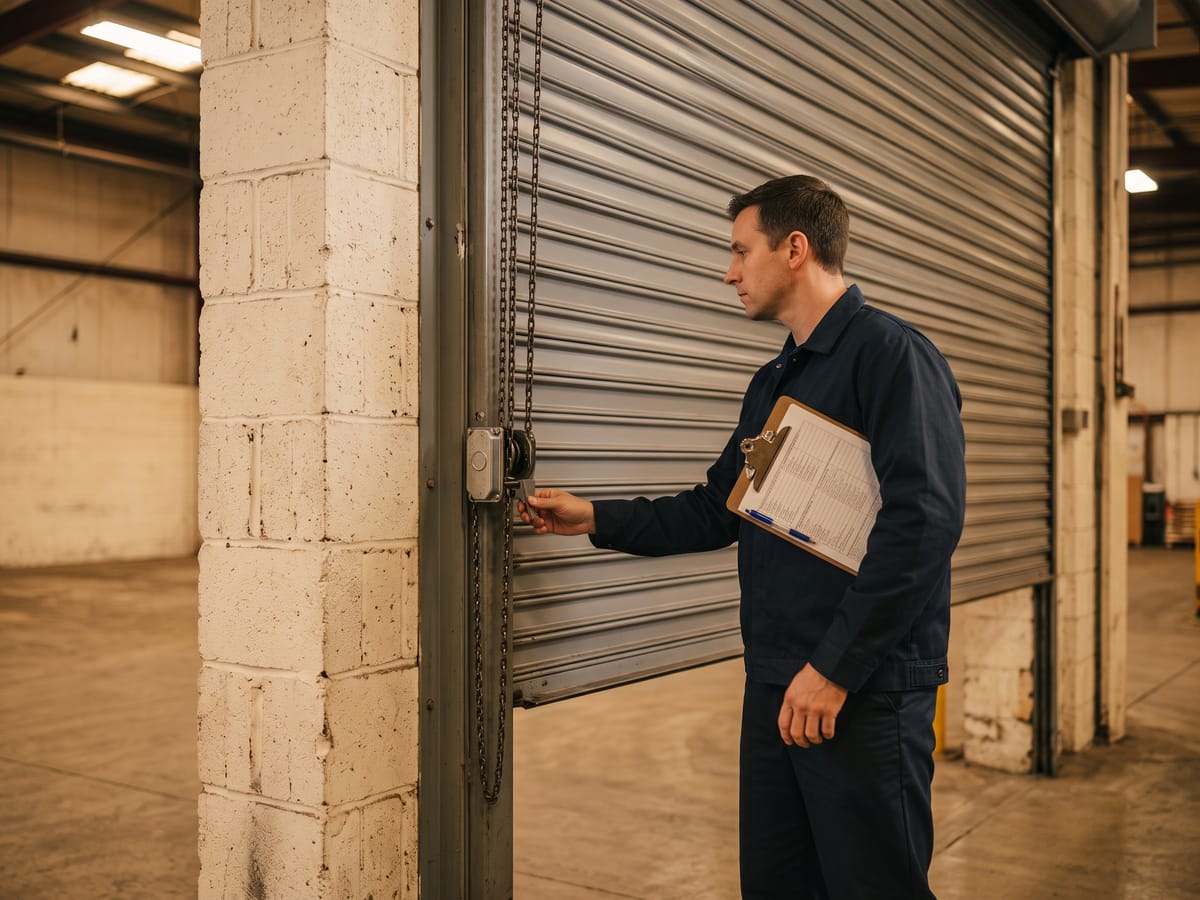
The NFPA 80 Annual Drop Test
NFPA 80, the standard for fire doors that most local fire codes adopt, requires fire door assemblies to be inspected and drop tested at least once a year. The test confirms the door releases and closes completely on its own, at a controlled speed, with no one guiding it.
The standard also requires the test to be run twice in a row. The first drop proves the door closes. The door is then reset, and a second drop proves the release mechanism was reset correctly. The results are documented, and those records need to be on hand when the fire marshal asks for them.
The professionals we dispatch for this work are experienced with the drop test procedure and the documentation that goes with it. If the door fails, the technician can quote the repair on the spot, before any work begins.
What Happens After You Call
Getting a fire door repaired or tested takes one call. Here is the process.
1. Describe the Door
Tell us what the door is doing, or simply that the annual test is due. Label and model details help but are not required.
2. We Dispatch a Commercial Pro
We match the job with a local professional experienced with fire-rated doors, and the technician confirms your appointment window with you.
3. Test, Quote, Repair
The technician inspects the door, quotes the price upfront, and completes the work once you approve. Test results are documented for your records.
What Fire Door Repair Costs
It depends on what failed. Resetting a dropped door and retesting it is often a modest service call. Replacing a fusible link or adjusting the governor lands in the low hundreds for most doors. Damaged slats, spring work, or a curtain that needs sections rebuilt cost more, and a door past saving may be worth replacing outright. The technician quotes the price before starting, so you approve the number first.
Because most fire doors are rolling steel, the hardware overlaps heavily with standard service doors. If a non-rated door in your building is acting up as well, the same visit can often cover roll-up door repair too.
Fire-Rated Door Questions
What is a fire-rated door?
A fire-rated door is a labeled door assembly built to resist fire for a set period, commonly 45 minutes, 90 minutes, or 3 hours. During a fire it closes automatically and compartmentalizes the building, slowing the spread of flames and smoke and keeping escape routes usable.
How often does a fire door need to be drop tested?
NFPA 80, the fire door standard most local fire codes adopt, requires fire door assemblies to be inspected and drop tested at least once a year. The test confirms the door closes fully on its own, and the results have to be documented and kept available for the fire marshal.
What happens during a drop test?
The technician releases the automatic closing mechanism and confirms the door closes completely under its own control at a safe speed. The door is then reset and dropped a second time, which NFPA 80 requires in order to prove the release mechanism resets correctly. The results are written up for your records.
My fire door dropped and will not reset. What should I do?
Do not force it. Resetting a dropped fire door means restoring spring tension and re-engaging the release mechanism in the correct order, and doing it wrong can damage the door or leave it unable to close in a real fire. Call us and we will dispatch a commercial door professional experienced with fire door hardware.
Is an inoperable fire door a code violation?
In most jurisdictions, yes. Fire codes require rated doors to be maintained in working condition, and an inspector can cite a door that fails to close. Beyond fines, a non-working fire door can create serious liability and insurance exposure if a fire ever occurs, so it is worth fixing promptly.
Can a fire door be tied into the building alarm system?
Many can. Alarm-activated release hardware closes the door when smoke detectors or the fire alarm trigger, instead of waiting for heat to melt a fusible link. The technician can tell you what your specific door supports.
Do the technicians handle both rolling steel and sectional fire doors?
Yes. The commercial door professionals in our network work on rolling steel fire doors, the most common type, as well as fire-rated sectional and counter doors across the common ratings.
Keep Your Fire Doors Compliant
Schedule a repair or your annual drop test. Call (888) 427-9949 any time and we will dispatch a qualified commercial door professional near you.