Skip to content
Call Us: (888) 427-9949

Garage Door Opener Repair

A humming motor, a stubborn remote, a door that reverses for no reason: tell us what your opener is doing and we will dispatch a qualified local pro who works on every major brand.

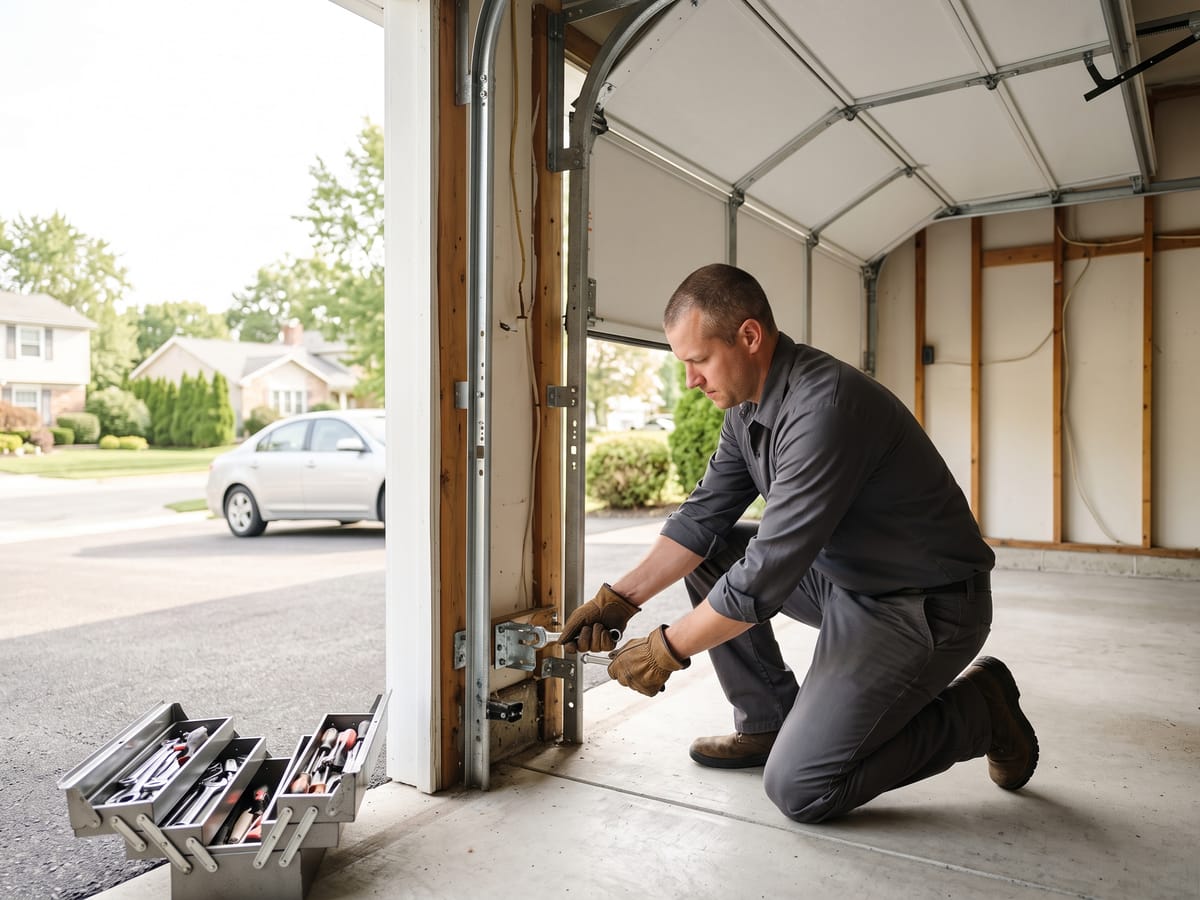
Technician checking a residential garage door opener during a service visit

What Garage Door Opener Repair Covers

Garage door opener repair is the diagnosis and fix of the motorized unit that raises and lowers your door: the motor head, the drive (chain, belt, or screw), the trolley, the safety sensors, the remotes and wall controls, and the logic board that ties it all together. When you call Apex, we dispatch a qualified local professional who works on openers every day, and the technician quotes the price before touching anything.

One honest note before anything else. A large share of "broken opener" calls turn out to be a broken spring. The opener is only strong enough to guide a properly balanced door, so when a torsion spring snaps, the motor strains, hums, and gives up. If your door suddenly feels dead and you heard a loud bang from the garage recently, start with our garage door spring repair page. If the problem really is the opener, you are in the right place.

Openers also share their fate with the rest of the door. Worn rollers, dry hinges, or a door drifting out of balance all force the motor to work harder than it should. For everything beyond the opener itself, our garage door repair page covers the full range of fixes the network handles.
Common Opener Symptoms and What They Usually Mean

You do not need to diagnose the opener yourself, but knowing the likely cause helps you describe the problem when you call.

The Opener Hums but the Door Doesn't Move

A humming motor with no movement usually points to one of three things: a stripped main drive gear (many openers use a nylon gear that wears out with age), a trolley that was disconnected when someone pulled the emergency release cord, or a door made too heavy by a failed spring. A gear kit is one of the more affordable opener repairs. A broken spring is a different job entirely, which is why the technician checks the door's balance before blaming the motor.

The Remote Works Only Some of the Time

A weak battery is the boring answer and it is often the right one. Past that, the usual causes are worn remote buttons, a damaged antenna wire hanging from the motor head, or radio interference, and certain LED bulbs are notorious for causing it. A technician can test the range, reprogram or replace the remote, and track down interference if the signal keeps dropping.

The Door Starts to Close, Then Reverses

This is the opener protecting you, not failing. The photo-eye sensors mounted near the floor reverse the door when the beam between them is blocked, dirty, or knocked out of alignment, and most openers blink a light to complain when that happens. Direct sunlight on a lens can trigger it too. If the sensors check out, the force and travel limit settings may need recalibration, which is a quick adjustment for a technician.

LiftMaster, Chamberlain, Genie, and Other Major Brands

The professionals in our network repair and replace openers from every major manufacturer, and most stock parts for the common failures so the job can often be finished in one visit.

LiftMaster

The professional-grade line installed in a huge share of homes. Belt, chain, and wall-mount models, with MyQ smart control on recent units. Typical repairs include drive gear kits, trolleys, safety sensors, and logic boards, and parts are widely available.

Chamberlain

LiftMaster's retail sibling, sold through home improvement stores and sharing much of the same engineering and the MyQ platform. Common fixes are gear and sprocket kits, sensor alignment, and remote or keypad programming.

Genie

Known for screw-drive openers alongside belt and chain models, with Aladdin Connect for smart control. On older screw drives the carriage and coupler are the usual wear points, and both are routine replacements for an experienced technician.

Craftsman, Linear, Marantec, Wayne Dalton, and other brands are covered too. If you can read us the model number from the motor head when you call, great. If not, the technician will identify it on site.

Why Call Apex for Opener Trouble

One number, a confirmed appointment, and a price you approve before any work starts.

24/7 Dispatch

Openers pick bad moments to quit. Call any hour and we start finding an available local pro right away.

Upfront Pricing

The technician diagnoses the opener and quotes the repair before work begins. You approve the price first.

All Brands Covered

The independent pros in our network are licensed and insured, and they work on openers from every major manufacturer.

Repair the Opener or Replace It?

A good technician will not push a new unit on you when an inexpensive gear kit solves the problem. The honest answer depends on the opener's age, what failed, and what you want from the door going forward.

Repair Usually Makes Sense When

  • The unit is under about ten years old
  • One specific part failed: a gear kit, a sensor, a remote, a trolley
  • Replacement parts are still made for the model
  • The door itself is balanced and in good shape

Replacement Is Worth Considering When

  • The opener is 10 to 15 years old or more
  • It predates 1993 and has no photo-eye safety sensors
  • It uses a fixed-code remote instead of rolling-code security
  • Breakdowns keep coming, or one repair costs half the price of a new unit
  • You want quieter operation, battery backup, or smart control

If you are also replacing the door itself, it usually pays to handle both at once, since an aging opener paired with a heavier new door tends to struggle. Our garage door installation page covers what goes into a full door replacement.

Choosing a Replacement: Belt, Chain, or Smart

If replacement is the right call, the drive type is the first decision. The technician can walk you through the options on site, but here is the short version.

Belt Drive

A reinforced rubber belt moves the door instead of a chain, making this the quietest common drive. That matters when a bedroom or living space sits above or beside the garage. Belt drives cost a little more than chain, though the gap has narrowed.

Chain Drive

The workhorse. A metal chain brings more noise but excellent durability, usually at the lowest price. A sensible pick for detached garages and heavier doors where sound is not a concern.

Smart and WiFi Features

Most mid-range openers now ship with WiFi built in, so you get phone control, open and close alerts, and scheduled closing without a separate add-on. Wall-mount units free up ceiling space, and battery backup keeps the door working through a power outage.

What Happens After You Call

No research project required. Describe the problem and we take it from there.

1. Describe the Problem

Tell us what the opener is doing: humming, clicking, blinking, or nothing at all. A model number helps but is not required.

2. We Dispatch a Local Pro

We match your request with a qualified opener technician in your area, and they confirm the appointment window with you.

3. Approve and Repair

The technician tests the opener, explains what failed, and quotes the price. Work starts only after you approve.

What Opener Repair Costs

Small fixes such as sensor realignment, remote programming, or a new wall button usually land at the low end of the range, often under a couple hundred dollars including the visit. Mechanical repairs such as a gear and sprocket kit or a new trolley sit in the middle. A failed logic board can approach the price of a new unit, which is when the repair-or-replace conversation is worth having.

A new opener installed typically runs in the mid hundreds, with wall-mount and premium smart models above that. Whatever the job turns out to be, the technician quotes the price after diagnosing the opener in person, and nothing happens until you approve it.

Opener Repair Questions, Answered

Why is my garage door opener not working?

The usual suspects are a dead remote battery, misaligned safety sensors, a tripped breaker or unplugged motor unit, or a stripped internal gear. A failed spring can also mimic opener failure by making the door too heavy for the motor to lift. The technician we dispatch tests each of these and tells you exactly what failed before quoting the fix.

Why does my garage door start closing and then reverse?

That reversal is a built-in safety feature, so the opener is doing its job. It usually means the photo-eye sensors near the floor are blocked, dirty, or knocked out of alignment, or the force and travel settings need recalibration. A technician can realign the sensors and reset the system so the door closes fully and safely.

The opener hums but the door does not move. What does that mean?

A hum with no movement means the motor is running but its power is not reaching the door. Common causes are a stripped drive gear, a trolley disconnected by the emergency release cord, or a broken spring leaving the door too heavy for the motor. Stop pressing the button once you notice this, since repeated attempts can burn out the motor. Have it diagnosed first.

Which opener brands do the technicians work on?

The independent pros in our network work on all major brands, including LiftMaster, Chamberlain, Genie, Craftsman, Linear, and Marantec. Most stock parts for the common failures, such as gear kits and safety sensors, so many repairs are finished in a single visit.

How long does a garage door opener last?

A professionally installed opener typically lasts 10 to 15 years. Usage matters: a door cycled eight times a day wears faster than one cycled twice. Regular maintenance, and keeping the door itself balanced so the opener is not straining, stretches that lifespan.

Is a smart or WiFi opener worth it?

For many households, yes. You can check from anywhere that the door is closed, get an alert when it opens, and let in a guest or a delivery without sharing a code. Most mid-range belt and chain drive units now include WiFi as standard, so the upgrade often adds little cost when you are replacing an opener anyway.

Can I fix the opener myself?

A few checks are safe to try: swap the remote battery, confirm the motor unit is plugged in and the breaker is on, and wipe the sensor lenses clean. Leave anything involving the springs, cables, or drive assembly to a professional. Those parts are under tension and the injury risk is real.

Do I need a new opener if mine has no safety sensors?

Openers made since 1993 are required to have photo-eye sensors that reverse the door when something crosses the beam. If yours has none, it is old enough that replacement is the sensible move, both for safety and because parts for units that age are hard to find.

Get Your Opener Working Again

Send the form or call (888) 427-9949 and we will connect you with a qualified local pro who repairs and installs garage door openers.