Garage Door Spring Replacement, Done Safely
A broken spring is the most common garage door failure and the most dangerous one to touch. Call and we will dispatch a qualified local pro to replace it safely, often the same day.
The Most Common Garage Door Repair, and the Riskiest to Attempt Yourself
Garage door spring replacement is the removal of a broken or worn counterbalance spring and the installation of a new one matched to your door's exact weight and height. The springs do the actual lifting; the opener only guides the door. When you call Apex, we dispatch a qualified local professional who replaces the spring, rebalances the door, and quotes the full price before starting.
A spring's job is to counterbalance the weight of the door, often 150 to 350 pounds. When it breaks, all of that weight comes back at once. The opener strains and gives up, the door will not lift by hand, and forcing it risks bending panels or snapping cables. A door with a broken spring should stay closed until a professional arrives.
This is also the one repair we tell everyone not to attempt on their own. A wound torsion spring stores a large amount of energy and releases all of it instantly if a winding bar slips. The pros we dispatch carry proper winding bars, replacement springs in common sizes, and the training to unload the old spring safely.
Not sure the spring is actually the problem? Springs, cables, rollers, and openers can fail in similar-looking ways. Our overview of garage door repair services walks through the usual suspects, or just call and describe what you see.
Signs Your Garage Door Spring Is Broken
Most spring failures announce themselves. Here is what to look and listen for.
- A loud bang from the garage. A snapping spring releases its stored tension all at once, and it sounds like something heavy hit the floor.
- The door opens only a few inches and stops, even though the opener is running. Openers have safety limits and quit when the door suddenly weighs too much.
- The door feels extremely heavy when you try to lift it by hand.
- A visible gap in the spring above the door. A healthy torsion spring is one tight coil; a broken one separates into two pieces.
- The door rises crooked, shudders in the tracks, or slams shut faster than it used to.
- Slack, drooping, or tangled cables on either side of the door.
That last one matters. When a spring snaps, the lifting cables often unwind off their drums or fray under the sudden load. If you can see loose cable, mention it when you call so the technician arrives prepared to handle garage door cable repair in the same visit.
Why Call Apex for a Broken Spring
Spring work rewards experience. We match your door with a local professional who does this every week.
Safety-First Replacement
The independent pros we dispatch are licensed, insured, and equipped for high-tension spring work.
High-Cycle Options
Ask about springs rated for several times the standard cycle life. The technician can price both options on site.
24/7 Dispatch
Springs do not break on a schedule. Call any time and we will find the first available pro near you.
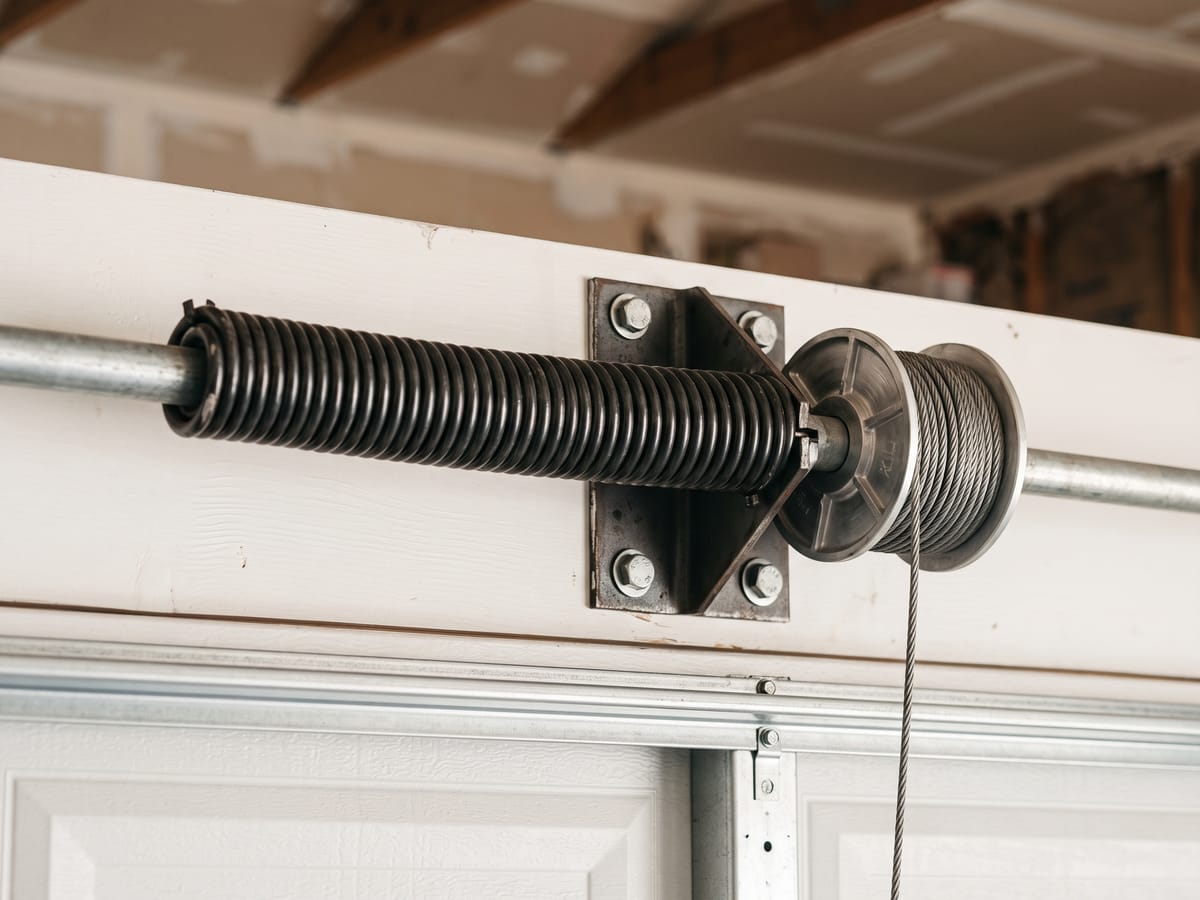
Torsion Springs vs Extension Springs
Most doors use one of two spring systems. Torsion springs mount on a steel shaft above the door opening and twist to store energy. They are the standard on modern doors: smoother, longer lasting, and easier to fine-tune for balance.
Extension springs stretch along the horizontal tracks on each side of the door. They are more common on older doors and garages with limited headroom, and they should always be fitted with safety cables, which keep a snapped spring from flying across the garage.
The technician we dispatch will identify your system, measure the door, and match the replacement by wire size, diameter, and length. Close is not good enough; a mismatched spring leaves the door out of balance and wears out the opener before its time.
Cycle Ratings: How Long Springs Last
Springs are consumable parts. Each one is rated in cycles, where one cycle is one full open and close. A standard residential spring is rated around 10,000 cycles. At three to four uses a day, that is roughly seven years of service. Households that treat the garage as the front door get through it much faster.
High-cycle springs are rated for 25,000 cycles or more, several times the standard life, usually for a modest step up in price. If your garage is the main entrance to your home, they are worth asking about when the technician quotes the job.
One more rule the pros follow: on a two-spring door, replace both springs even if only one broke. Both were installed the same day and carry the same wear, so the survivor is usually close behind. Doing both in one visit costs less than two service calls and keeps the door properly balanced.
Spring life also depends on care. Light lubrication and a yearly balance check slow down rust and uneven wear, the two things that end springs early. Our garage door maintenance page covers what a proper tune-up includes.
What Happens After You Call
From your call to a working door, usually within the day.
1. Describe the Failure
Tell us what happened: the bang you heard, a door that will not lift, a gap in the spring. That is enough to get started.
2. We Dispatch a Local Pro
We match your request with a qualified spring technician nearby, and they confirm the appointment with you. Same-day slots are often available.
3. Approve the Quote, Get It Fixed
The pro measures the door, quotes the exact price, and replaces the springs once you approve. Most jobs finish in about an hour.
What Garage Door Spring Replacement Costs
Cost depends on the spring system, the size and weight of the door, whether one or both springs are replaced, and whether you choose standard or high-cycle parts. Most residential spring replacements land in the low hundreds, parts and labor included.
Whatever your door turns out to need, the price is set before the work starts. The technician we dispatch inspects the door, explains what failed, and gives you an upfront quote. You approve it or you do not; there is no obligation to proceed.
Spring Repair Questions, Answered
How do I know if my garage door spring is broken?
The most common sign is a loud bang from the garage, often when nobody is near the door. You may also see a visible gap in the spring above the door, the door may feel extremely heavy, or it may rise only a few inches even though the opener is running. Any one of these is reason to stop using the door and call.
Is it safe to replace a garage door spring myself?
No. Garage door springs are under extreme tension and can cause serious injury if handled without the right tools and training. This is a job for a trained, insured professional with proper winding bars. It is the one garage door repair we tell everyone not to attempt.
Why did my garage door spring break?
Wear is the usual cause. Springs are rated for a set number of open and close cycles, and every use spends one. Rust, missed lubrication, and big temperature swings between seasons all speed up the process, which is why springs often fail during very cold or very hot stretches of the year.
Should I replace both garage door springs at the same time?
Yes, when the door has two. They were installed together and carry the same wear, so the second spring usually fails soon after the first. Replacing both in one visit saves you a second service call and keeps the door properly balanced.
How much does it cost to replace garage door springs?
It depends on the size and weight of your door, which determines the springs it needs, and on whether you replace one or both. Most residential jobs land in the low hundreds including labor. The technician we dispatch quotes the exact price on site before any work begins.
How long does garage door spring replacement take?
Once the technician is on site with the right springs, most replacements take 30 minutes to an hour. Add a little time for measuring, balancing the door, and a safety check of the cables and rollers. Nearly all spring jobs finish in a single visit.
What is the difference between torsion and extension springs?
Torsion springs sit on a shaft above the door opening and twist to store energy; they are the standard on modern doors. Extension springs stretch along the tracks on each side of the door and are more common on older or low-headroom garages. The technician matches the replacement to whichever system your door uses.
How long do garage door springs last?
A standard spring is rated around 10,000 cycles, which works out to roughly seven to ten years at a few uses per day. Heavy daily use shortens that considerably. High-cycle springs rated for 25,000 cycles or more last several times longer for a modest step up in price.
Get That Broken Spring Replaced Today
Keep the door closed and give us a call at (888) 427-9949, or send the form. We will dispatch a qualified local pro to replace your springs safely.