Garage Door Roller Replacement
A grinding, shaking door usually means the rollers are worn out. One call and we will dispatch a qualified local pro to fit a smooth, quiet new set.
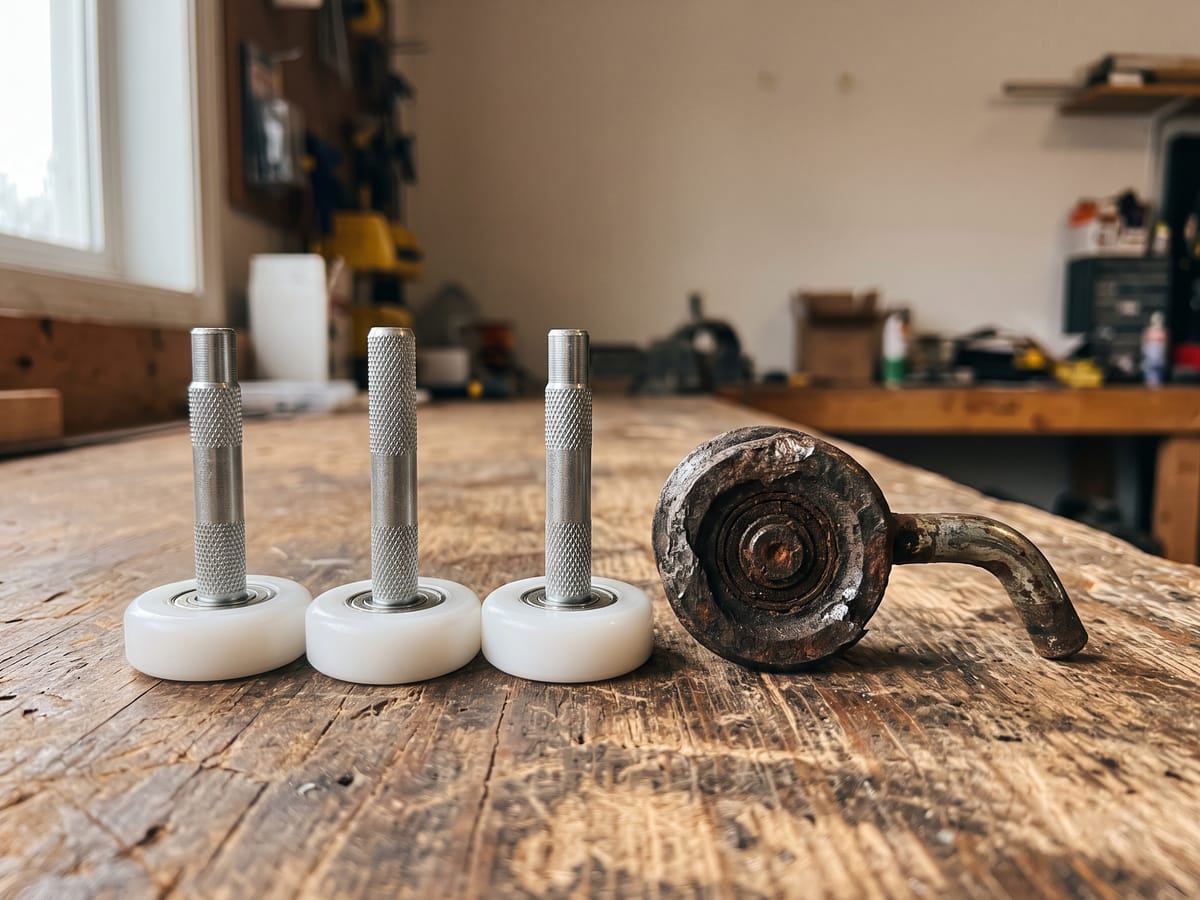
What Garage Door Roller Replacement Involves
Garage door roller replacement swaps out the small wheels that carry your door along its tracks for a new set, most often quiet sealed nylon rollers. Apex Garage Door & Repairs is a nationwide dispatch service: you call, we send a qualified, independent local professional who inspects the door, quotes an upfront price, and replaces the full set, typically in about an hour.
Rollers do more work than their size suggests. A family that uses the garage as the front door can put well over 1,500 cycles on it in a year, and every one of those cycles runs each roller the full length of the track. The basic plastic or steel rollers fitted to many new doors are simply not built for that pace. As they wear, the door gets louder, the travel gets rougher, and the strain lands on parts that cost far more to replace.
The good news: rollers are one of the cheapest components on the whole system, and a fresh set makes an old door feel years younger.
Signs Your Garage Door Rollers Are Worn
Rollers rarely fail all at once. They announce themselves for months first, and the symptoms are easy to spot once you know what to look for.
Grinding, squealing, or rattling as the door moves
The door shakes or shudders in the tracks
Jerky, hesitating travel instead of one smooth motion
Visible cracks, chips, or flat spots on the wheels
Rollers that wobble sideways on their stems
Dry, rusted, or missing ball bearings
A quick way to check: with the door closed, look at the rollers you can see from inside the garage. Healthy wheels sit snug in the track and spin freely. Worn ones look chewed up, sit crooked on the stem, or skid along the track instead of rolling. Leave the bottom rollers alone, though. Their brackets are connected to the lift cables and are under spring tension.
Steel, Nylon, or Sealed-Bearing: Choosing Rollers
Not all rollers are worth the same money, and the honest answer is that each type has a place. Here is how they compare.
Builder-Grade Plastic and Steel
These are the rollers most doors ship with. Plastic wheels have no bearings at all and can wear out within a few years. Basic steel rollers last longer and handle weight well, which still makes them a reasonable pick for very heavy custom or oversized doors, but they are the loudest option, and they need lubrication a couple of times a year to keep running smoothly.
Standard Nylon
A nylon wheel glides along the track instead of clanking against it, so these run much quieter than steel and are gentler on the tracks. The tradeoff is the open bearing: it still collects dust and grit, so it needs periodic lubrication and will not match the lifespan of a sealed unit.
Sealed-Bearing Nylon
The upgrade pick. A nylon wheel over a sealed bearing, typically packed with 13 balls, keeps dirt out and lubricant in. These are the quietest and longest-lived rollers you can buy, with ratings that commonly reach 50,000 cycles or more. They cost more per roller, but on a set of ten the difference is modest, and if a bedroom sits above the garage you will hear the difference every day.
The technician we dispatch carries common sizes on the truck and will tell you plainly which grade suits your door and budget before quoting the job.
Worn Rollers Are Hard on Your Opener
An opener is built to guide a smooth-running door, not to drag a fighting one. Every seized roller turns a routine cycle into a strain test.
Extra Motor Load
A seized roller skids instead of spinning, and the opener has to drag it the full length of the track on every cycle. That friction wears out the motor and drive gear early.
Wear That Spreads
Wobbling rollers hammer the tracks and hinges out of shape over time, turning an inexpensive roller swap into a much longer repair list.
False Safety Reversals
Openers reverse when they sense resistance. Dragging rollers can trigger random stops and reversals that look like an opener fault but are not.
Is It the Rollers or the Tracks?
The two problems sound similar but behave differently. When rollers are the issue, the noise and shaking follow the door through its whole travel, the wheels look visibly worn, and the door still sits centered between the tracks. When a track is the issue, the door tends to bind or scrape at one particular spot, you can often see a dent or bend in the rail, and one side of the door may rub while the other runs clean.
The two also feed each other. Worn rollers batter the tracks out of alignment, and bent tracks chew up new rollers. That is why the technician inspects both before quoting, so you are not paying for fresh rollers that a damaged rail will ruin in a season.
One important warning: if a roller has jumped out of the rail or the door is hanging crooked, stop using the door entirely. That is no longer a roller job, it is an off-track door repair, and operating the door can make it fall.
Rollers are one of a dozen parts that can make a door misbehave, and symptoms overlap. If you are not sure what failed, start with our garage door repair overview, or call and let the pro work out which part gave up.
What Happens After You Call
No research project required. Describe the problem once and we handle the rest.
1. Describe the Symptoms
Tell us what the door sounds and looks like when it runs. Grinding plus shaky travel is usually enough for us to line up the right pro.
2. We Dispatch a Local Pro
We match your request with a qualified garage door professional near you, and the technician confirms the appointment with you. Same-day visits are often available.
3. Approve the Quote, Get It Done
The technician inspects the rollers, tracks, and hinges, quotes the price upfront, and replaces the full set once you approve.
What Roller Replacement Costs
Few garage door jobs cost less than a full roller swap. A complete set of quality sealed nylon rollers, installed, usually lands in the low hundreds, and basic steel comes in below that. Door height and roller grade move the number a little. As with every job we arrange, the technician quotes the full price after inspecting the door and before touching a wrench, with no obligation to proceed.
To get the most out of a new set, keep the tracks clean and the springs balanced. An annual garage door maintenance visit covers roller lubrication and inspection along with the rest of the hardware, which is the cheapest way to keep this repair from coming back early.
Roller Replacement FAQs
How do I know if my garage door rollers need to be replaced?
Watch and listen while the door runs. Grinding or squealing noise, shaky or jerky travel, and visible cracks, chips, or flat spots on the wheels are the classic signs. Rollers that wobble on their stems or have shed bearings are past due. If the rollers are original to a door that is more than seven years old, an inspection is worth scheduling.
Are nylon rollers better than steel rollers?
For most homes, yes. Sealed nylon rollers run far quieter and their bearings are protected from dust, so they need almost no upkeep. Steel rollers cost less and carry heavy doors well, but they are noisy and need regular lubrication. The technician we dispatch can quote both options so you can decide.
Can I replace garage door rollers myself?
We do not recommend it. The bottom rollers sit in brackets attached to the lift cables, which are under the full tension of the springs, and removing the wrong roller without the right tools can release that tension violently. A qualified pro can swap the whole set safely, usually in about an hour.
Will new rollers make my garage door quieter?
Usually, and often dramatically, if the rollers were the source of the noise. Swapping worn steel or plastic wheels for sealed nylon removes most of the metal-on-metal grinding. If noise remains, the technician will check the hinges, opener drive, and track alignment, since those can rattle too.
How many rollers does a garage door have?
Most standard residential doors use ten rollers, and taller doors use twelve. Technicians replace them as a complete set, because any old rollers left behind would keep making noise and wear unevenly against the new ones.
How much does garage door roller replacement cost?
This is one of the least expensive repairs a garage door ever needs. A full set of quality sealed nylon rollers, installed, usually lands in the low hundreds, with basic steel costing somewhat less. The technician we dispatch inspects the door first and quotes the complete price before any work begins.
How long do garage door rollers last?
It depends on the grade. Builder-grade plastic rollers can wear out within a few years, standard steel rollers are commonly rated around 10,000 open-close cycles, and quality sealed nylon rollers often carry ratings of 50,000 cycles or more. Balanced springs and clean tracks help any roller reach its rated life.
Ready for a Quieter Garage Door?
Call (888) 427-9949 or send the form and we will dispatch a qualified local pro to replace your rollers, often the same day.