Skip to content
Call Us: (888) 427-9949

Garage Door Cable Replacement and Repair

Lifting cables carry the full weight of your door, and when one fails the door becomes unpredictable. Tell us what you see and we will dispatch a qualified local pro.

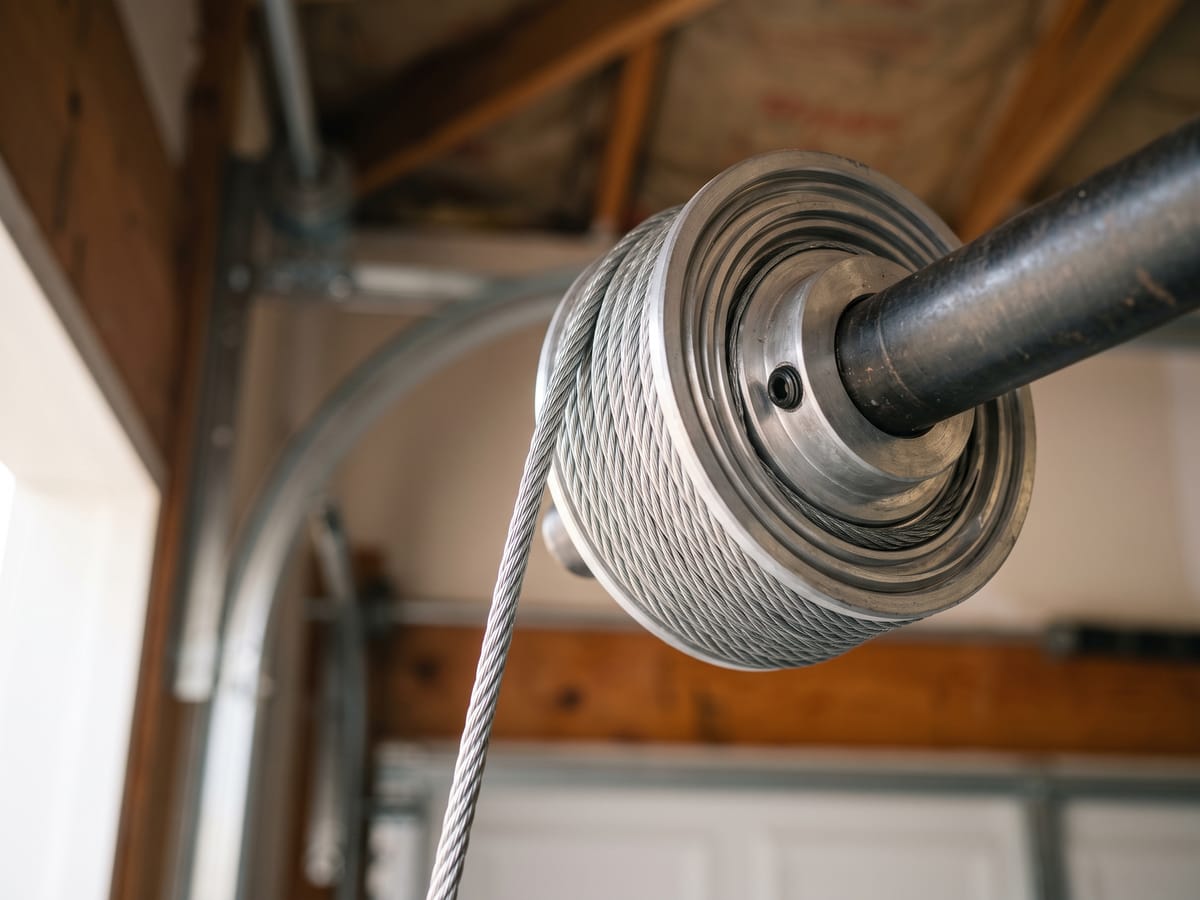
Close-up of a braided steel lifting cable wound around the grooved drum of a garage door torsion shaft

What Garage Door Cables Actually Do

Garage door cable replacement is the removal of worn or broken lifting cables and the installation of new ones, sized to your door and wound correctly onto the drums. When you call Apex, we dispatch a qualified local garage door professional who inspects both cables, quotes an upfront price, and does the work with the door safely secured.

The cables are easy to overlook. The springs store the energy that makes a heavy door feel light, but the cables are what deliver that force to the door itself. Each cable runs from a bracket at the bottom corner of the door up to a grooved drum on the shaft above the opening. As the shaft turns, the cables wind onto the drums and lift the door evenly from both sides.

That job keeps them under constant tension. A steel cable that hoists a door weighing 150 pounds or more, several times a day, will eventually stretch, corrode, and fray. When one finally lets go, the whole system loses its balance at once.
Signs You Need Garage Door Cable Replacement

Cables rarely fail without warning. A quick look at the bottom brackets and drums, with the door closed, is usually enough to spot trouble early.

Frayed or Rusted Cable Strands

Broken strands sticking out of the cable, or rust blooming near the bottom bracket, mean the cable is running on borrowed time. Replacing a frayed cable on your schedule costs far less than dealing with one that snaps mid-lift.

Door Hanging Crooked

If one side of the door sits lower than the other, one cable has stretched, slipped, or broken, and the good side is carrying weight it was never meant to. Stop using the door until it has been inspected.

Cable Off the Drum

A cable that has unwound or tangled around its drum will stop the door from tracking straight. This usually traces back to a moment of slack: the door hit an obstruction, a spring broke, or the drum worked loose on the shaft.

Slack or Dangling Cable

With the door fully closed, both cables should still be reasonably taut. A loose, drooping cable points to a drum that has slipped, a stretched cable, or a spring problem hiding behind it.

A cable that jumps its drum often drags the door sideways and pulls the rollers out of the rails. If your door has already shifted out of its tracks, our garage door off-track repair page covers what that visit looks like. The technician we dispatch can handle both in one appointment.

Why Cables and Springs Wear Together

Cables and springs are two halves of one counterbalance system, and they age on the same clock. A typical torsion spring is rated for about 10,000 open-close cycles, and the cables log every one of those cycles with it. By the time a spring is tired, the cables have usually stretched and frayed too.

The wear also feeds back and forth. Springs that have lost tension make the cables carry more of the load than they should, which accelerates fraying. A snapped spring throws sudden slack into both cables, which is the most common way a cable ends up wrapped around its drum. This is why the technician inspects the whole counterbalance system on a cable call, and why it often makes sense to replace cables during a garage door spring repair while the tension is already off.

Cable trouble can also imitate other failures: a straining opener, a shaking door, a loud bang from the garage. If you are not sure which part gave out, start with our garage door repair overview, or simply call and describe what the door is doing. Diagnosing it is the technician's job, not yours.

Loaded Cables Are Not a DIY Job

Even with the door down, the cables are anchored to springs holding serious stored energy. Releasing that tension in the wrong order is how people get hurt.

Tension Released Safely

The technician unloads the springs with proper winding bars and clamps the door in place before touching a cable, so nothing moves unexpectedly.

Matched to Your Door

Cables are sized by door height and weight. The pro installs the correct length and gauge and seats each cable in the drum grooves as the manufacturer intended.

Balanced and Tested

Cables are replaced in pairs, then the door is rebalanced and run through full cycles before the technician calls the job done.

What Happens After You Call

You do not need to know whether the problem is the cable, the drum, or the spring. Describe what you see and we take it from there.

1. Describe What You See

A crooked door, a dangling cable, a loud bang from the garage. Tell us what happened and when, and we will log the request right away.

2. We Dispatch a Local Pro

We match your request with a qualified garage door professional in your area, and the technician confirms the appointment with you. Same-day slots are often available.

3. Approve the Quote, Get It Fixed

The technician inspects the cables, drums, and springs, quotes an upfront price, and replaces the cables once you approve.

What Cable Replacement Usually Costs

Cable replacement sits at the affordable end of garage door work. Most jobs land in the low hundreds for a pair of cables, labor included. The price climbs when the failure took other parts with it, such as bent drums, a broken spring, or a door that needs to be set back on its tracks. Whatever the technician finds, you get a complete quote before any work starts, with no obligation to proceed.

Cable Repair Questions, Answered

What causes garage door cables to break?

Most cables fail from ordinary wear. Thousands of open and close cycles stretch the steel strands, and moisture near the bottom brackets adds rust that weakens them further. A door that is out of balance, or springs that have lost tension, puts extra strain on the cables and can make them snap early.

Is a broken garage door cable an emergency?

Treat it as one. The cables keep the door lifting evenly, so when one breaks the door can jam at an angle, come off its tracks, or fall. Stop using the door and call for service. Dispatch is available around the clock for exactly this situation.

Can I still use the door if a cable is broken?

No. Running the opener with a broken cable can bend the tracks, twist the panels, and strain the opener, turning a modest repair into a large one. If the door is stuck partway, keep people and vehicles clear of it until the technician arrives.

Why did my cable come off the drum?

A cable usually jumps the drum after it goes slack for a moment. That happens when the door closes onto an obstruction, when a spring breaks, or when the drum set screws loosen on the shaft. The technician will find the cause, rewind the cable, and reset the tension so it stays seated.

Should both cables be replaced at the same time?

Yes, and the technician will almost always recommend it. Both cables have logged the same number of cycles, so when one fails the other is usually close behind. Replacing them as a pair keeps the door balanced and saves you a second service call.

How long does garage door cable replacement take?

For a trained professional with the right parts on hand, a standard cable replacement usually takes under an hour. It can run longer if the drums or springs also need attention, or if the door has to be set back onto its tracks first.

How much does garage door cable replacement cost?

It is one of the more affordable garage door repairs. Most jobs land in the low hundreds for a pair of cables, parts and labor included, though damaged drums or worn springs add to the total. The technician quotes the full price before any work begins.

Get a Cable Repair Quote Today

A frayed cable only gets worse with every cycle. Call (888) 427-9949 or send the form and we will connect you with a qualified local garage door professional.