Balance Test
The opener is disconnected and the door is lifted by hand. A healthy door stays put at waist height. One that slams shut or drifts upward means the springs are carrying the wrong load.
A yearly tune-up catches worn springs, frayed cables, and drifting safety sensors before they take the door out of service. One call and we dispatch a qualified local pro to give your door a full going-over.
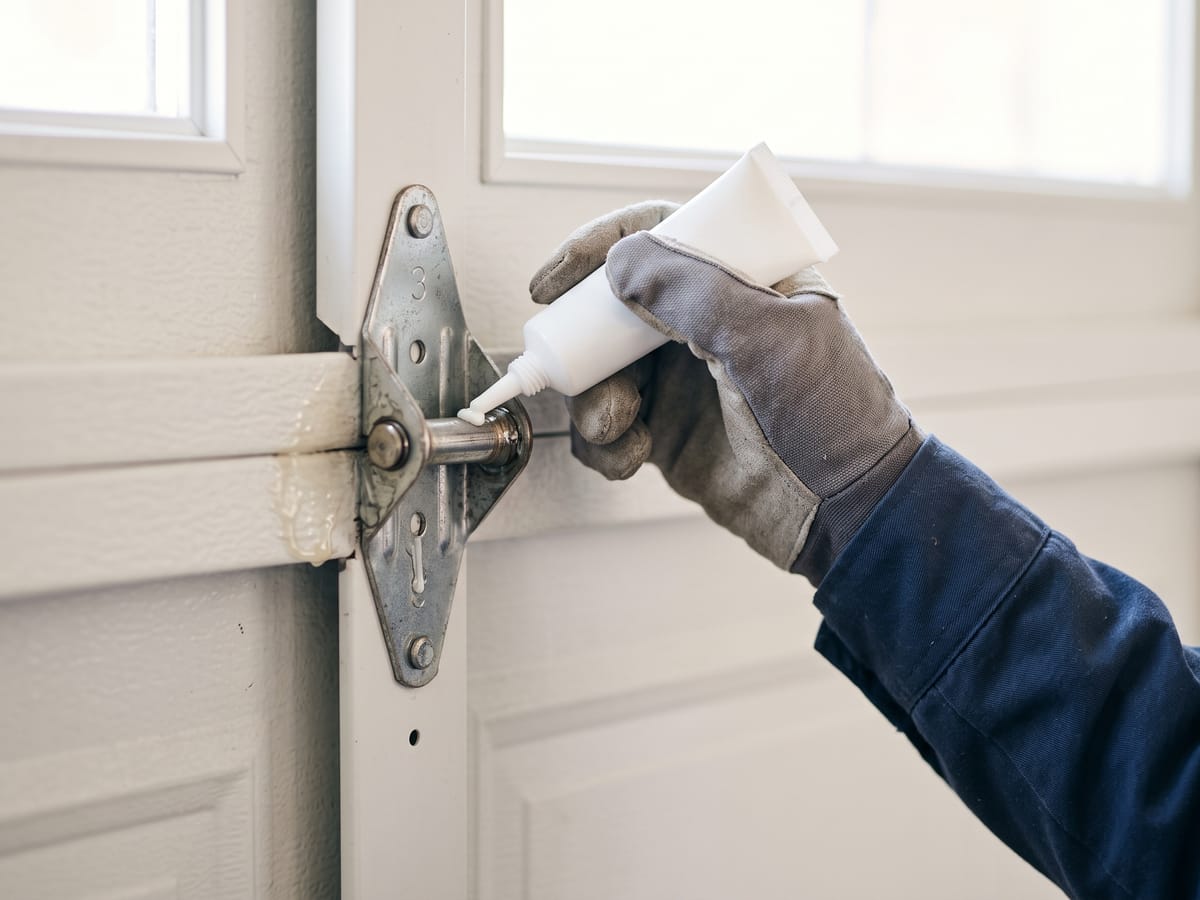
Garage door maintenance is a scheduled service visit where a technician inspects, adjusts, and lubricates every working part of the door: springs, cables, rollers, hinges, tracks, opener, and safety sensors. When you call Apex, we dispatch a qualified local professional who runs the full tune-up and flags anything that needs attention, with any extra work quoted before it begins.
A garage door in a typical household opens and closes around 1,500 times a year. Every cycle loads the springs and shakes the hardware a little looser. A tune-up resets all of that: tension gets corrected, bolts get tightened, moving parts get lubricated, and the safety systems get tested.
Most doors only get attention after something breaks. An annual visit is the cheaper habit, and the quieter one.
The visit works through the whole system, not just the part that squeaks. These are the core checks on every maintenance call.
The opener is disconnected and the door is lifted by hand. A healthy door stays put at waist height. One that slams shut or drifts upward means the springs are carrying the wrong load.
Springs are inspected for rust, stretched coils, and separation, then tension is adjusted so the springs carry the weight of the door instead of the opener.
Hundreds of open-close cycles vibrate hinges, brackets, and track bolts loose. Every fastener gets checked and snugged back down before wobble turns into misalignment.
Springs, hinges, rollers, and the opener rail get a garage-door-rated lubricant. This is the step that turns a screeching door back into a quiet one.
The photo eyes near the floor are cleaned and aligned, and the auto-reverse feature is tested against resistance so the door backs off when something is in its path.
The bottom seal and side weatherstripping are checked for cracks, flattening, and gaps that let in water, drafts, and pests.
The inspection also covers cable fraying, roller wear, track alignment, opener chain or belt tension, force settings, and the remotes and wall controls. If anything turns up that needs replacing, the technician explains what they found and quotes the work before touching it.
An hour of prevention beats a stuck car on a work morning. Here is what a yearly visit buys.
The auto-reverse and photo-eye sensors are the parts that protect people and pets. They get tested and calibrated on every visit.
Worn rollers, fraying cables, and loose hardware are cheap to sort out at a tune-up and expensive to fix after they cause a failure.
Correct spring tension and proper lubrication reduce strain on the door and the opener, adding years to both.
Garage doors rarely fail without warning. They usually spend months hinting first.
Squeaks usually mean dry hinges and rollers. Grinding often points to worn rollers dragging in the track. A sharp pop during travel can be a spring starting to fail. None of these fix themselves, and all of them are cheaper to deal with early.
A door that hesitates, shudders mid-travel, or runs slower than it used to is fighting friction or imbalance somewhere in the system. That fight lands on the opener motor, and the motor loses eventually.
If lifting the door by hand takes real effort, or one side reaches the floor before the other, spring tension has drifted or a cable has stretched. Both deserve a professional look soon, because they tend to get worse quickly.
Spring and cable failures. A torsion spring is rated for about 10,000 open-close cycles, roughly seven to ten years of average use. Rust and dry coils shorten that number. Correct tension and regular lubrication help springs reach their full rating instead of snapping early. If a spring has already let go, that is a job for garage door spring repair, not a tune-up.
Opener strain. When springs fall out of balance, the opener hauls weight it was never built to lift. Gears strip and motors burn out years ahead of schedule. A balanced door lets a modest opener last well past a decade.
Worn rollers and track damage. Rollers with flat spots or wobbly stems chew at the tracks and can eventually push the door off its rails. Catching them early makes garage door roller replacement a quick, inexpensive visit instead of an off-track emergency.
If something on your door has already failed, maintenance is the wrong tool. Start with our garage door repair page instead, or call and we will dispatch a local pro for the fix.
Once a year covers most homes. Treat it like a furnace check: put it on the calendar and stop thinking about it. If the garage is the main way in and out of the house, or the door runs more than four or five cycles a day, every six months is the better rhythm.
A tune-up typically takes 30 to 60 minutes on a standard residential door, and the cost is modest: usually a flat service fee, far below the price of the failures it helps prevent. As with every job we dispatch, the technician quotes the price before starting, and anything the inspection uncovers is quoted separately for your approval.
Booking a tune-up takes one call or one form. Here is the whole process.
Mention how the door has been behaving: noises, slow spots, when it was last serviced. Anything helps the pro come prepared.
We match your request with a qualified garage door professional in your area and confirm an appointment that fits your schedule.
The technician runs the full inspection, makes the adjustments, and walks you through anything worth watching before the next visit.
Once a year for most homes. Doors that run more than a handful of cycles a day, or that serve as the main entrance to the house, benefit from a visit every six months. If the door has never been serviced, do not wait for a symptom to show up first.
Squeaking, grinding, or popping noises, slow or jerky travel, a door that feels heavy to lift, or one that closes unevenly are the common ones. Any of these means the door is due. A door that still runs fine but has not been serviced in over a year qualifies too.
Yes, that is the main point of it. Worn rollers, fraying cables, and loose hardware are inexpensive to address during a maintenance visit. Left alone, they lead to broken springs and doors that come off their tracks, which cost far more to put right.
Plan on 30 to 60 minutes for a full inspection, lubrication, and adjustment on a standard residential door. It can run longer if the inspection turns up something that needs repair and you approve the extra work.
Yes. A tune-up is preventive: it keeps a working door in good condition. A repair call is reactive: something has already failed. Regular maintenance is how you keep repair calls rare.
A standalone tune-up is one of the least expensive garage door services, usually a modest flat fee. The technician we dispatch quotes the price before starting, and any repair the inspection uncovers is quoted separately for your approval.
Some of it. Homeowners can safely lubricate hinges and rollers, wipe the photo-eye lenses, and tighten accessible bolts. Spring tension and cable work should be left to a professional, because those parts are under heavy load and can cause serious injury if released incorrectly.
A well-kept door is a quiet, reliable one. Send the form or call (888) 427-9949 and we will connect you with a qualified local pro for a full maintenance visit.